
-
Welcome!
Register and log in easily with Twitter or Google accounts!
Or simply create a new Huddle account.
Members receive fewer ads , access our dark theme, and the ability to join the discussion!

-
-

-
-
Topics
-
-
-
-
Posts
-
(1).thumb.gif.c991ead14106875ce4bbb9e20baa4b88.gif)
-

By GamecockSmitty4 · Posted
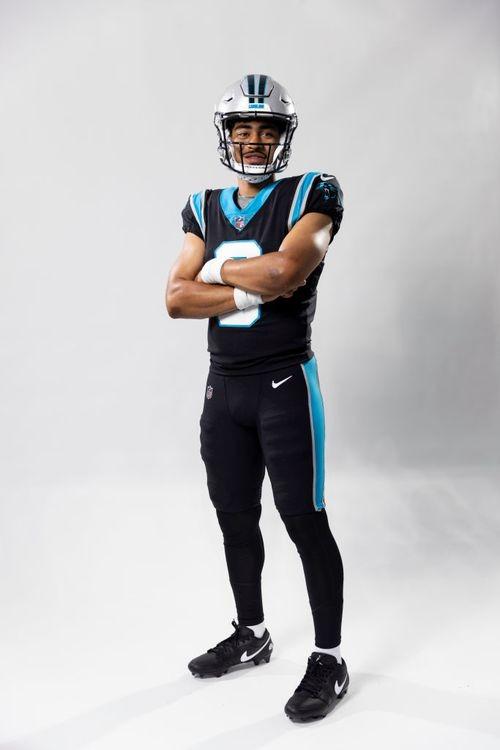
Here’s a summary of the JJ and Luke podcast transcript. Opening / Bryce Young Fifth-Year Option • JJ: Breaking news — Panthers picked up Bryce Young’s fifth-year option at $25.9M, guaranteed, coming in 2027. Combined with his 2025 salary of ~$6M, that’s $31M over two years — called it a “no-brainer.” • Luke: Enthusiastic about the move. Highlighted Bryce’s improving TD/INT ratios (11/10 → 15/9 → 23/11) and the value of entering year three with Dave Canales. Noted $25M is a bargain relative to the $60M top of market. Luke’s Personal Update — Charlotte Christian Football • Luke: Working with Charlotte Christian school football program, which hired a new head coach. Coaches include Greg Olsen, Luke, and Greg’s dad Chris Olsen (a New Jersey State coaching Hall of Famer). • JJ: Jokingly quipped that Charlotte Christian’s coaching staff is “the world’s greatest” — a Fox analyst, a Hall of Famer, and the best Panthers RB ever — all coaching middle school football. • Luke: Praised Chris Olsen’s deep football knowledge spanning decades and his ability to connect with kids. Round 1, Pick 19 — Monroe Freeling, OT, Georgia • JJ: Panthers were on the clock and submitted their pick almost immediately — a sign of confidence and preparation. Freeling is 6’7”, 320 lbs, played in the SEC in a pro-style system. • Luke: Loved the pick. Emphasized you can never have too many quality offensive linemen. Noted Freeling’s size, athleticism, and arm length as key traits. Said the pick also reflects team’s philosophy of drafting great people, not just great players. • JJ: Noted reporter Darren Gantt compared Freeling favorably to Jordan Gross — bigger, heavier, and faster — as a potential franchise left tackle. • Luke: Pointed out that young players like Freeling still have physical development ahead of them, comparing the trajectory to Christian McCaffrey’s growth from age 20 onward. Round 2, Pick 49 — Lee Hunter, DT, Texas Tech • JJ: Panthers traded up from 51 to 49 (pick swap with Minnesota) to grab Hunter. Played audio from Panthers area scout Kaden McLuhan, who scouted Hunter. • Scout Kaden McLuhan (audio): Said Hunter’s size is immediately striking, and that everyone around him spoke glowingly about his character, energy, and love for the game. • Luke: Praised Hunter as a massive (6’3”, 320 lbs, ~34” arms) two-gap nose tackle who fits perfectly in the Evero defense. Compared his prospect profile to Akiem Hicks. Said having Derek Brown, Bobby Brown, Derrick Brown, Terson Wharton, and now Hunter creates varied body types that stress offensive linemen. • JJ: Noted Hunter ranked third among all prospects in run-stuff rate and sixth in interior pass-rush win rate — addressing a perception that he couldn’t rush the passer. Rounds 3–7 Highlights • Luke: Highlighted WR Brazle (3rd round, 6’4”, 437 speed, 1,000+ yards at Tennessee) as the vertical threat the offense needed. Also praised OL Sam Heck (5th round) as a technically sound player whose “short arms” caused him to fall but who has proven himself. • Luke: Mentioned CB Will Lee (6’1”, 33” arms) fits the Panthers’ DB prototype — big, long corners. • Luke: Praised S/LB hybrid Zaki Wheatley (5th round, 6’3”) as a big nickel similar to Trayvon Merek. • Luke: Excited about the linebacker competition between Devin Lloyd, Trevvin Wallace, and Claudin Cherless. • JJ: Noted Panthers had the #1 “steal/overreach” rating in the entire draft — drafting players lower than consensus big boards projected. Around the League • Luke: Admitted being “a little jealous” that the Miami Dolphins drafted LB Jacob Rodriguez (Luke’s favorite LB in the draft). Has personal connections to Miami’s coaching staff (Jeff Hafley, DC Shawn Dugen — a childhood teammate). • Luke: Also noted Miami’s selection of OT/G Kaden Proctor out of Alabama, who will likely move to guard. League Trends — Bigger Tight Ends / 12 & 13 Personnel • JJ: Observed the NFL saw its highest run rate in ~11 years (~52%) and a notable pivot toward big blocking tight ends in this draft. • Luke: Explained the cyclical nature of NFL offense/defense evolution — as defenses get smaller to match spread offenses, teams counter with bigger personnel (12/13 formations), which then forces defenses to get bigger at the nickel/“big nickel” spot. Called it an ongoing arms race. -
 Dan Vladar is their best player and that is going to be the difference in the series
-
-



Recommended Posts
Archived
This topic is now archived and is closed to further replies.